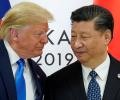
In a statement, the Chinese ministry of commerce said that it would file a lawsuit with the World Trade Organisation against the US for its "wrongful practice," the Global Times reported.
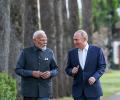
Speaking at a joint press conference with Belarus President Alexander Lukashenko on Thursday, Putin said that Russia agrees with the proposals to cease hostilities but "proceeds from the assumption that this cessation should lead to long-term peace and eliminate the root causes of the crisis."
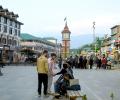
Hours after, however, firing from the Pakistani side was reported in Akhnoor sector in Jammu and Kashmir. Drones were also seen in the Pir Panjal area.

India was the sole abstention while all other 14 members of the Council voted in favour of the resolution that decided that processing or payment of funds, other financial assets, economic resources, and provision of goods and services necessary to ensure the timely delivery of humanitarian assistance are permitted and are not a violation of the asset freezes imposed by the Council or its Sanctions Committee.

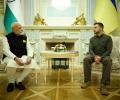
Modi in a post on X said the two leaders also discussed measures to further strengthen Special and Privileged Strategic Partnership between the two countries.
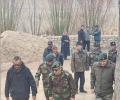
India and China agreed during their military talks on Sunday to stay in close touch and work out a mutually acceptable solution to the "remaining issues" in eastern Ladakh at the earliest, but there was no indication of clear forward movement in ending their three-year-long border standoff.

China on Tuesday confirmed that it has reached an agreement with India to end the standoff between the two armies in eastern Ladakh.

China does not have to give up what it took in 2020, it will never give up its claim to Arunachal Pradesh, Ladakh and other areas, and it has all the time now to plan its next surprise, points out Lieutenant General Prakash Katoch (retd).

India and China have held their first diplomatic talks since withdrawing troops from two face-off points in eastern Ladakh, reflecting on the lessons learned from the border row to prevent future incidents. The two sides agreed to maintain peace and tranquillity in border areas, prepare for the next meeting of Special Representatives on the boundary question, and highlighted the importance of regular exchanges and contacts at diplomatic and military levels. The talks come after the completion of the disengagement process from the last two friction points, following an agreement finalized in October 2022.
The spokesperson said India has "always advocated constructive, solution-oriented, and practical engagement with all stakeholders to achieve a negotiated settlement to this conflict".
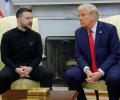
US President Donald Trump cut short discussions with Ukrainian President Volodymyr Zelenskyy on Friday after he and Vice President JD Vance confronted Ukraine's leader in a tense Oval Office exchange.
During the meeting, it was reiterated that "restoration of peace and tranquillity, and respect for the LAC are the essential basis for restoration of normalcy in bilateral relations", it said.
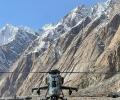
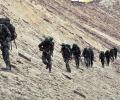
Defence sources stated that the disengagement involves removing infrastructure and withdrawing troops from both sides. The process is expected to be completed by Tuesday.
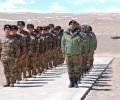
Chinese foreign ministry spokesperson Mao Ning told the media in Beijing on Monday that the two sides held an in-depth exchange of views on expediting the resolution of relevant issues.

India and China on Wednesday held 'constructive' and 'forward-looking' diplomatic talks to resolve the over four-year border standoff along the Line of Actual Control (LAC) in eastern Ladakh but there was clear no indication of any breakthrough.

India and China on Thursday vowed to redouble efforts to resolve the remaining issues in eastern Ladakh at the earliest and 'stabilise and rebuild' ties even as External Affairs Minister S Jaishankar conveyed to his Chinese counterpart Wang Yi during a meeting that the Line of Actual Control (LAC) must be respected.

India and China held talks in New Delhi to discuss the lessons learned from the eastern Ladakh military standoff and prevent its recurrence. The two sides also prepared for the next meeting of the Special Representatives on the boundary question. The talks took place under the framework of the Working Mechanism for Consultation and Coordination on India-China Border Affairs (WMCC). Both sides highlighted the importance of regular exchanges and contacts at diplomatic and military level to maintain peace and tranquility in the border areas.
He said that the two nations will have issues in the foreseeable future. However, there are ways of addressing those issues and what happened in 2020 was not the way to address those issues.
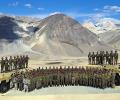
Her comments come a day after External Affairs Minister S Jaishankar said in Geneva that roughly 75 percent of the "disengagement problems" with China are sorted out but the bigger issue has been the increasing militarisation of the frontier.
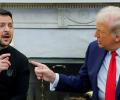
US President Donald Trump and Ukrainian President Volodymyr Zelenskyy engaged in a heated exchange in the Oval Office, culminating in Zelenskyy's abrupt departure from the White House without signing a crucial minerals agreement. Trump accused Zelenskyy of risking millions of lives and gambling with World War III, while Zelenskyy responded by questioning the US's role in the war. The incident has strained US-Ukraine relations, with Trump questioning Zelenskyy's readiness for peace and Senator Lindsey Graham expressing doubts about future cooperation.

Leaders from around the world extended their greetings to India on its 76th Republic Day, emphasizing the importance of bilateral relations and expressing hope for a stronger future. The Indian diaspora across the globe celebrated the occasion with enthusiasm at Indian missions abroad, where the national tri-colour was unfurled, accompanied by cultural performances and patriotic fervour. The celebrations highlighted the strong bonds of friendship and cooperation between India and its global partners.

Ukrainian President Volodymyr Zelenskyy told the United Nations Security Council that 'we have to prepare' the second peace summit to end the Russia-Ukraine war 'altogether' and he has invited India and other countries to join the peace process.
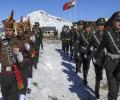
China and India were able to "reduce differences" and build "some consensus" on disengaging troops from friction points to end the standoff in eastern Ladakh and agreed to maintain dialogue to reach a resolution acceptable to both sides at an "early date", the Chinese defence ministry said on Thursday.

Following the disengagement, both sides will soon start the coordinated patrolling in their respective areas, sources added.

The situation along the Line of Actual Control (LAC) in eastern Ladakh is stable but sensitive and not normal, Chief of Army Staff General Upendra Dwivedi said on Tuesday on the dragging military standoff between China and India in the region.

If you redeem your investments when prices have fallen sharply, you will be selling at low prices and may make a permanent loss. On the other hand, if you remain patient and remain invested, you give your investment the time to recover, says Dwaipayan Bose

Prime Minister Narendra Modi is deeply concerned by the war in Ukraine and his meeting with President Volodymyr Zelenskyy in New York demonstrates his commitment to finding a way forward and contributing in any way possible to a resolution of the conflict, Foreign Secretary Vikram Misri said.
India on Monday announced it has reached an agreement with China on patrolling along the Line of Actual Control (LAC) in eastern Ladakh, in a major breakthrough in ending the over four-year-long military standoff ahead of a likely meeting between Prime Minister Narendra Modi and Chinese President Xi Jinping in Russia this week.
If China is accommodating regarding Depsang and Demchok, a resolution of the Sino-India territorial dispute in Eastern Ladakh could be possible.
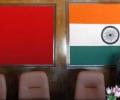
India and China have agreed to take measures to further ease the situation at the borders while continuing to implement the October agreement to resolve the standoff in eastern Ladakh comprehensively. The two sides held the 32nd meeting of the Working Mechanism for Consultation & Coordination on China-India Border Affairs (WMCC) in New Delhi, agreeing to maintain communication through diplomatic and military channels and safeguard sustainable peace and stability in the border areas. This meeting follows the October 21 agreement between the two countries to resolve the over four-year-long military standoff in eastern Ladakh.
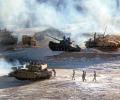
There was no visible forward movement in disengagement of troops in the remaining friction points as the Chinese side did not show flexibility in their approach on it at the 11th round of military talks.

Gearing up for Trump 2.0 era, Chinese President Xi Jinping on Tuesday cautioned there will be no winner in a tariff or tech wars between China and the United States and vowed that Beijing would firmly safeguard its interests.
"We are waiting for our good friend Modi and best regards to him," the Russian media quoted Putin as saying in the meeting with Doval.

In the talks, Putin hoped that Prime Minister Narendra Modi will travel to Russia's Kazan next month to attend the annual BRICS summit.

The Jaishankar-Wang talks came amid the dragging border row in eastern Ladakh that entered its fifth year in May.

The sources have said that patrolling will begin at these points once the disengagement that began last week is completed and both sides will move their respective troops and dismantle temporary structures.
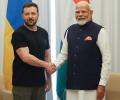
Prime Minister Narendra Modi on Friday conveyed to Ukrainian President Volodymyr Zelenskyy during a meeting that India would continue to do everything within its means to support a peaceful solution to the Ukraine conflict and that the way to peace is through 'dialogue and diplomacy'.
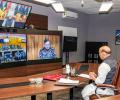
Defence Minister Rajnath Singh on Friday praised the Indian Army as one of the most trusted and inspiring organisations in the country, highlighting its significant role in safeguarding borders, combating terrorism and assisting civil administration in times of need.
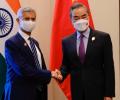
External Affairs Minister S Jaishankar on Thursday conveyed to his Chinese counterpart Wang Yi the need for an early resolution of all outstanding issues along the Line of Actual Control in eastern Ladakh, and asserted that bilateral ties should be based on mutual respect, mutual sensitivity and mutual interest.
Disengagement of Indian and Chinese troops has started at two friction points in Demchok and Depsang Plains in the Eastern Ladakh sector, defence officials said.
